Womenswear brand
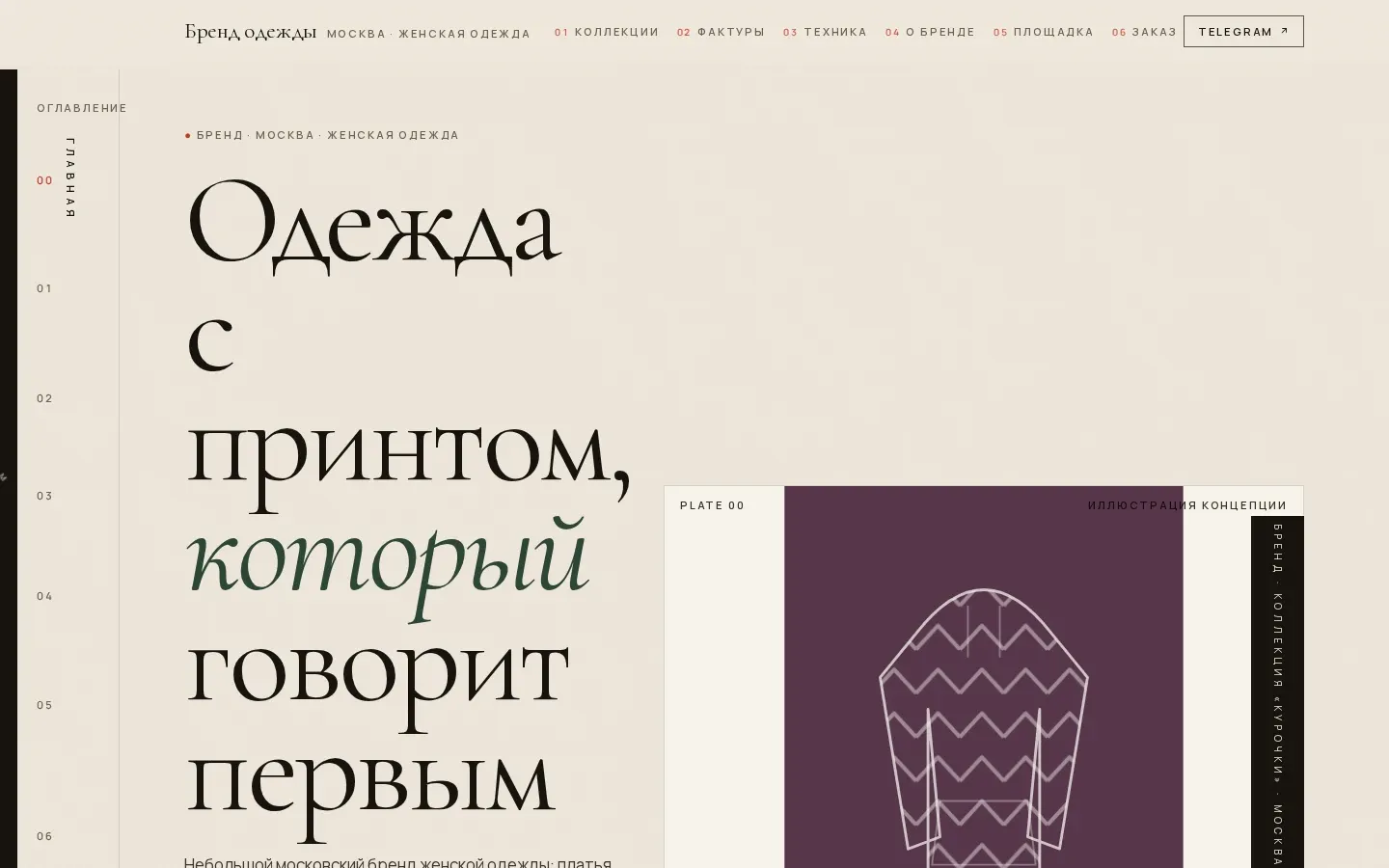
Clothes with original prints. A catalogue numbered like a museum collection, with silhouettes drawn from scratch.
Ask for a live demo
The business is real, so we show its name and link only with the owner’s consent. We’ll walk you through the live version on a call.
- What
- Catalogue
- Where
- Moscow
- Year
- 2026
- Stack
- Next.js, React, TypeScript, Tailwind CSS
The brief
A small Moscow brand makes dresses, jumpers, skirts and capes with its own prints. It shows them at seasonal pop-ups and takes orders in Telegram. The range is scattered across hundreds of channel posts, so a new customer can’t see it as a whole.
What we did
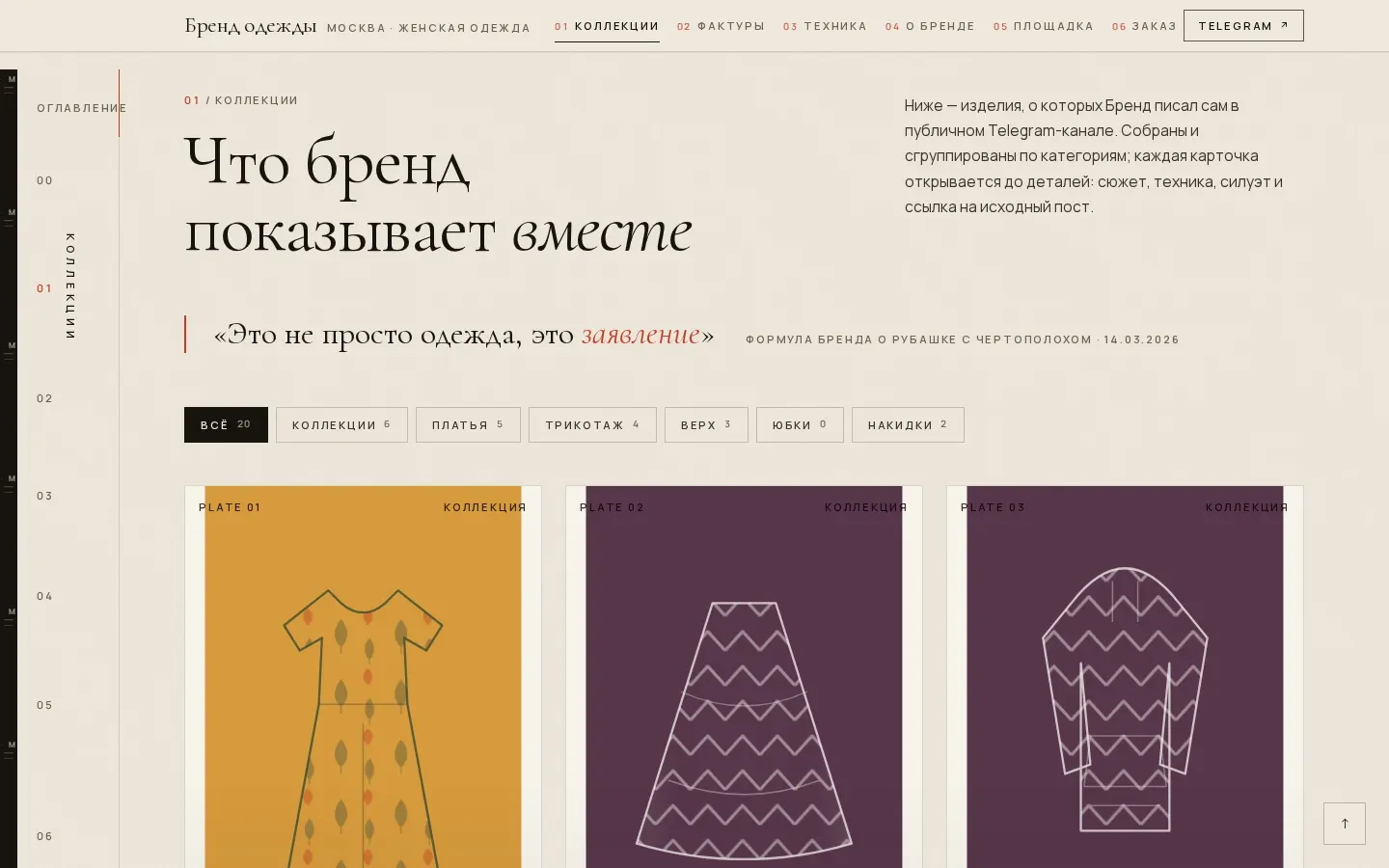
- A catalogue from posts. We went through the brand’s public channel and collected the pieces it wrote about itself. That made twenty cards with a filter by six categories, each linking to the original post.
- Museum numbering. Every piece got a number, like an item in a collection. The silhouettes are drawn from scratch, and the prints on them follow the brand’s real motifs.
- Textures up close. Fabrics and trims open full screen and can be paged with the keyboard arrows.
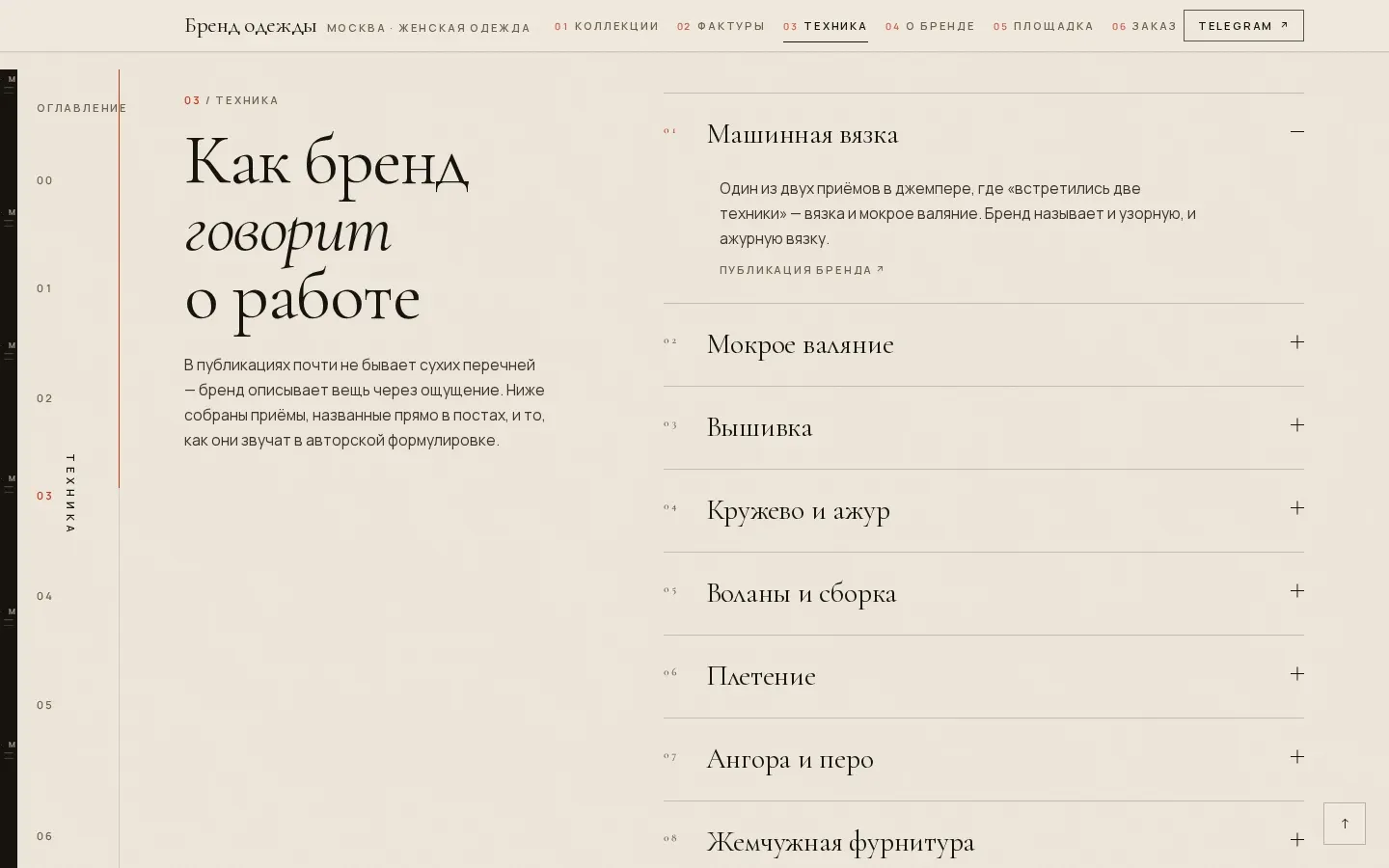
- Techniques in the brand’s words. Machine knitting, felting, embroidery, lace and four more techniques are described with quotes from the posts rather than a dry list.
- Honest about prices. The brand doesn’t publish prices or stock, so instead of inventing them the site sends people to Telegram, where they’ll get the real numbers.
How it’s built
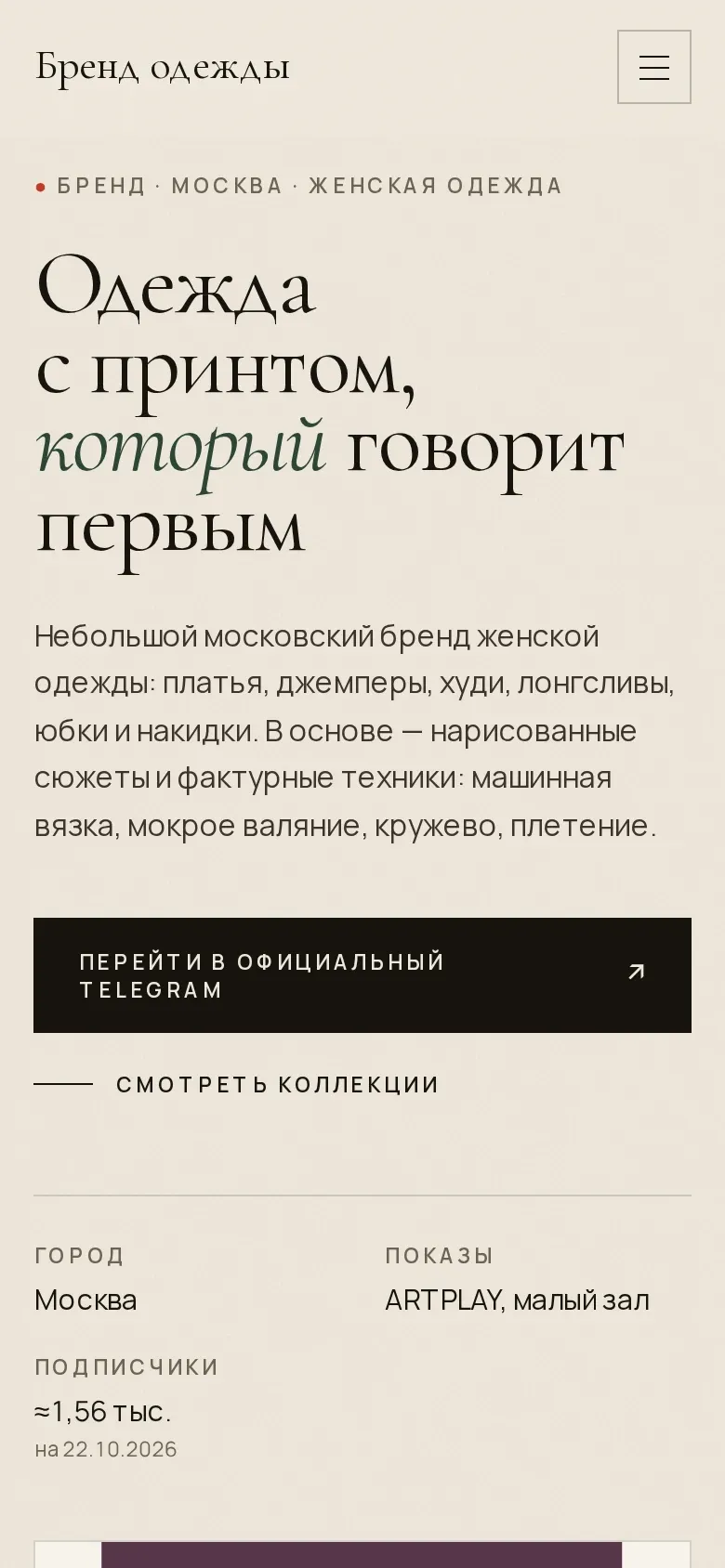
Next.js, TypeScript and Tailwind CSS. On wide screens a numbered table of contents runs down the left; on phones it folds into the menu. Headings are set in Cormorant Garamond, body text in Manrope.
Screens